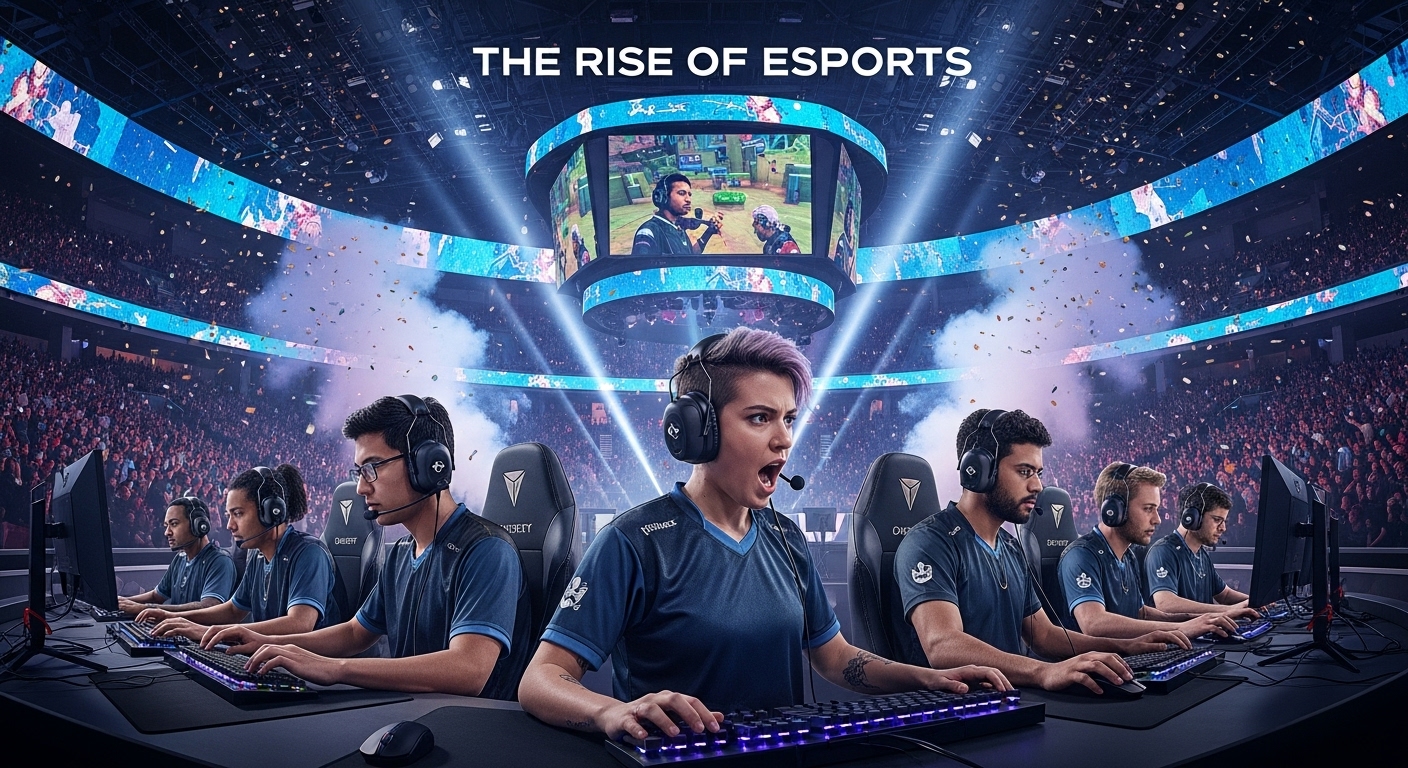
Introduction to the World of Esports
In the past two decades, Esports has transformed from a niche hobby enjoyed by a few passionate gamers into a global phenomenon that commands the attention of millions. Competitive gaming is now a billion-dollar industry, attracting sponsorships, media rights deals, and massive live audiences around the world. What was once dismissed as a pastime is now a professional, organized, and highly lucrative field that mirrors the structure and excitement of traditional sports.
The rise of Esports reflects not only technological progress but also a cultural shift in how society perceives entertainment, competition, and digital interaction. As video games evolved from simple arcade titles to complex multiplayer ecosystems, they opened the door to organized competition, turning gamers into athletes and spectators into dedicated fans.
The Origins of Competitive Gaming
Esports did not appear overnight. Its roots go back to the early 1970s, when the first known video game competition took place at Stanford University for the game “Spacewar.” The prize was nothing more than a magazine subscription, yet the event symbolized the beginning of organized digital competition.
During the 1980s, as arcade culture exploded, players competed for high scores on games like “Pac-Man” and “Donkey Kong.” Magazines such as Twin Galaxies began recording top scores, effectively creating the first leaderboards. Although these competitions were informal, they set the stage for the competitive spirit that defines Esports today.
By the 1990s, the introduction of home consoles and local area network (LAN) gaming changed everything. Titles like “Doom,” “Quake,” and “StarCraft” turned multiplayer gaming into a shared experience. LAN parties became the social centers of early Esports, where players gathered in basements or small venues to test their skills face-to-face.
The 2000s: The Birth of the Esports Industry
The 2000s were the decade when Esports became a structured industry. The arrival of high-speed internet made online multiplayer gaming accessible, while games like “Counter-Strike,” “Warcraft III,” and “Halo” established loyal competitive communities.
Organizations began to form professional teams, sponsors entered the scene, and tournament organizers like the Electronic Sports World Cup and Major League Gaming emerged. South Korea played a pioneering role during this time, elevating Esports into mainstream entertainment. Television networks broadcasted “StarCraft” matches to national audiences, and players such as Lim Yo-hwan (known as BoxeR) became household names.
The infrastructure of modern Esports—team branding, player contracts, streaming rights, and coaching staff—originated in this era. What was once a casual pursuit became a structured profession with rules, leagues, and financial rewards.
The Rise of Streaming and Global Audiences
The real explosion of Esports came in the 2010s with the growth of streaming platforms. Services like Twitch and YouTube Gaming allowed anyone to broadcast live gameplay to global audiences. This not only democratized viewership but also allowed fans to engage directly with players and teams.
Games such as “League of Legends,” “Dota 2,” and “Counter-Strike: Global Offensive” became central pillars of Esports culture. Developers began supporting their games with professional leagues, prize pools, and regular events.
The League of Legends World Championship drew millions of viewers annually, rivaling traditional sports in scale and production quality. Valve’s The International, with its multi-million-dollar prize pool funded by the gaming community, demonstrated how passionate and financially committed the fan base could be.
The Business of Esports
Esports has become a legitimate business sector that attracts investors, advertisers, and traditional sports organizations. The industry now features franchised leagues, similar to the NBA or NFL, with teams purchasing slots worth millions of dollars.
Revenue streams include sponsorships, advertising, ticket sales, media rights, and in-game purchases tied to Esports events. Companies from outside gaming—such as energy drink brands, technology firms, and even luxury fashion labels—have joined the ecosystem, recognizing the marketing potential of a young, tech-savvy audience.
Esports organizations have also diversified into content creation, merchandising, and lifestyle branding. Teams like FaZe Clan and 100 Thieves are not just competitors but entertainment and fashion brands that engage audiences through social media, music, and apparel.
The Athletes Behind the Screens
Esports athletes, often referred to as professional gamers, have shattered stereotypes about gaming being an unproductive or solitary activity. These players undergo intense training regimens, sometimes practicing for 10 to 12 hours a day. They analyze strategies, work with coaches, maintain fitness routines, and even receive mental health support to handle pressure.
Their reflexes, coordination, and decision-making speed are comparable to traditional athletes. In some cases, the margin for error in a professional match is measured in milliseconds. The rise of gaming houses and training facilities has further professionalized the scene, offering players structured environments with physical trainers, nutritionists, and analysts.
Major Esports Titles and Their Impact
Certain games have defined eras in Esports history, each bringing its own community, strategies, and audience.
League of Legends has arguably been the most consistent force in competitive gaming, supported by Riot Games’ structured league system and global tournaments. Its annual world championship stands as one of the biggest events in gaming.
Dota 2, developed by Valve, revolutionized Esports funding through community contributions. The International remains the benchmark for prize pools, sometimes exceeding 30 million dollars.
Counter-Strike: Global Offensive continues to dominate the first-person shooter genre, maintaining a passionate fan base and one of the longest-running competitive scenes in gaming history.
Fortnite brought Esports to younger audiences, mixing gaming with entertainment through celebrity collaborations and virtual concerts.
Valorant, Apex Legends, and Call of Duty have also carved out their space, ensuring that Esports remains diverse and constantly evolving.
Esports Arenas and Events
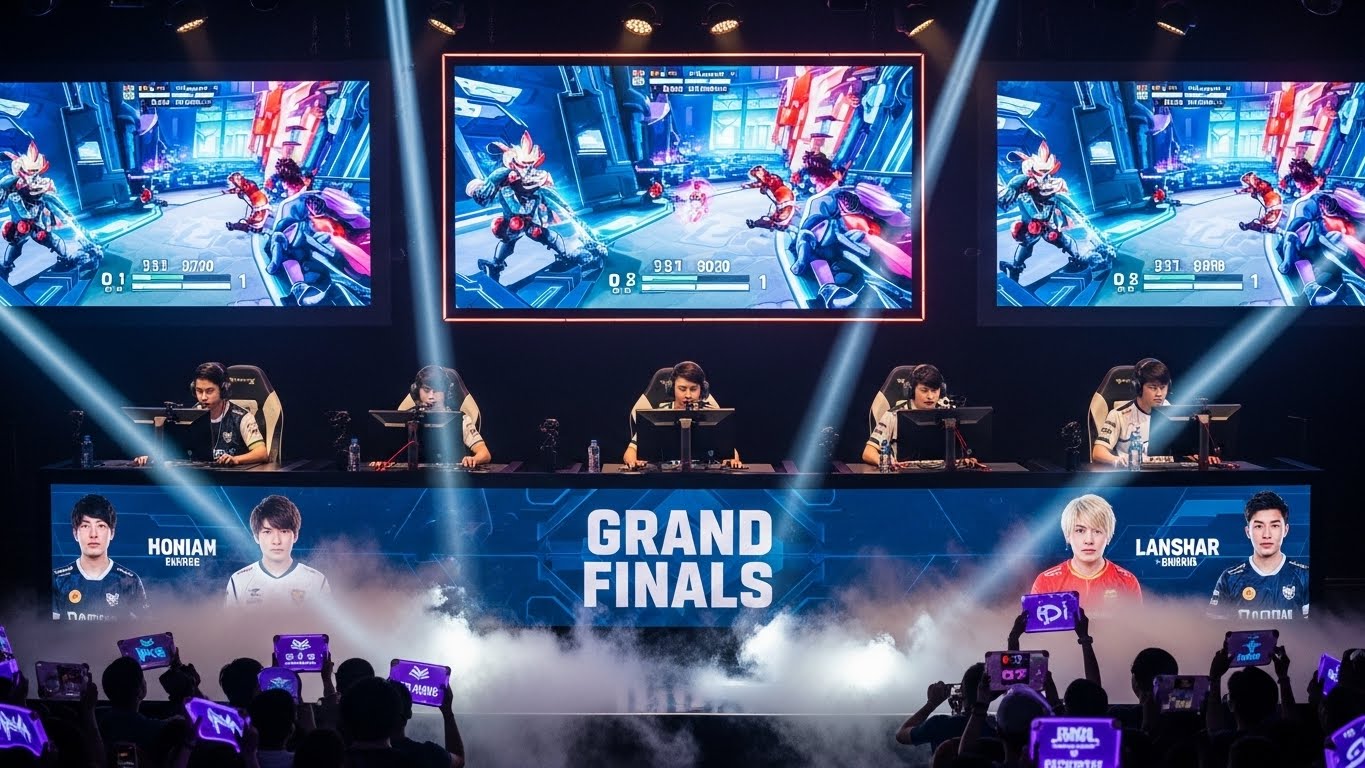
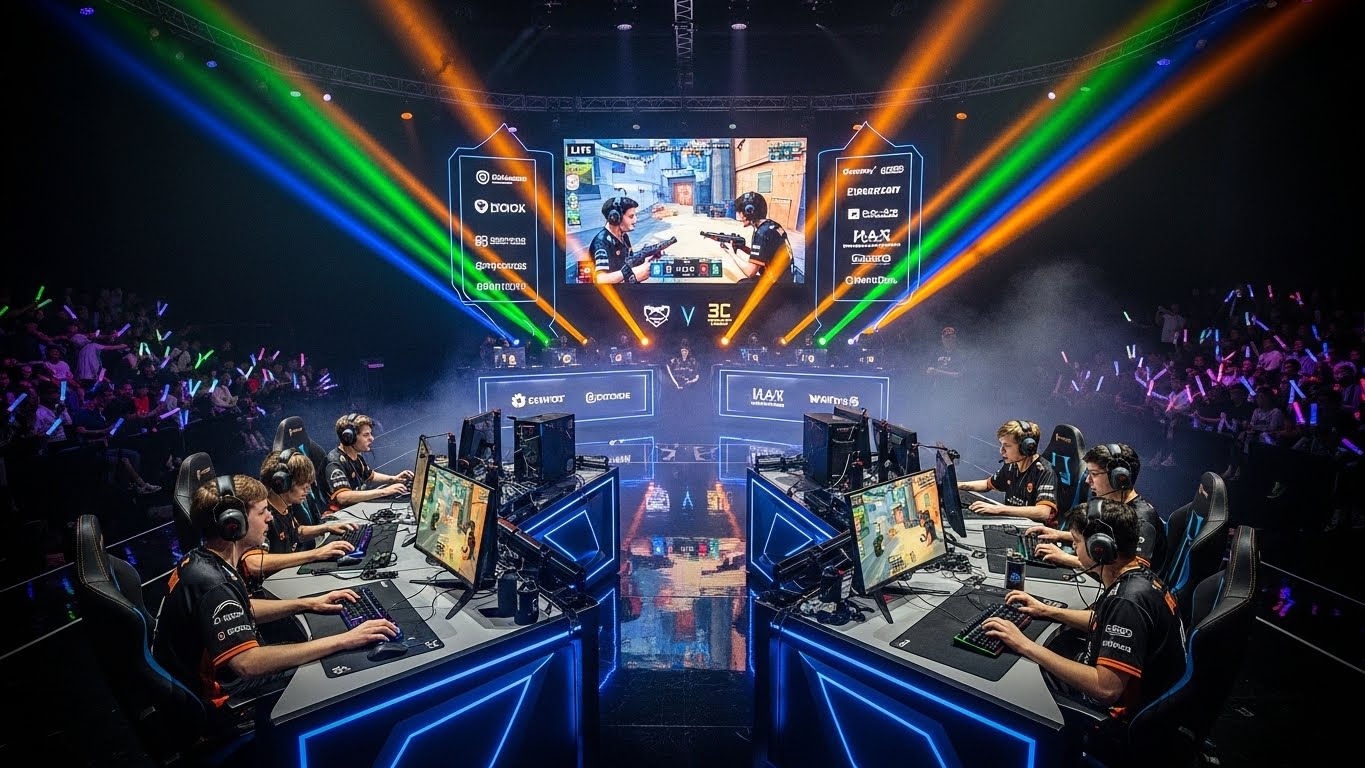
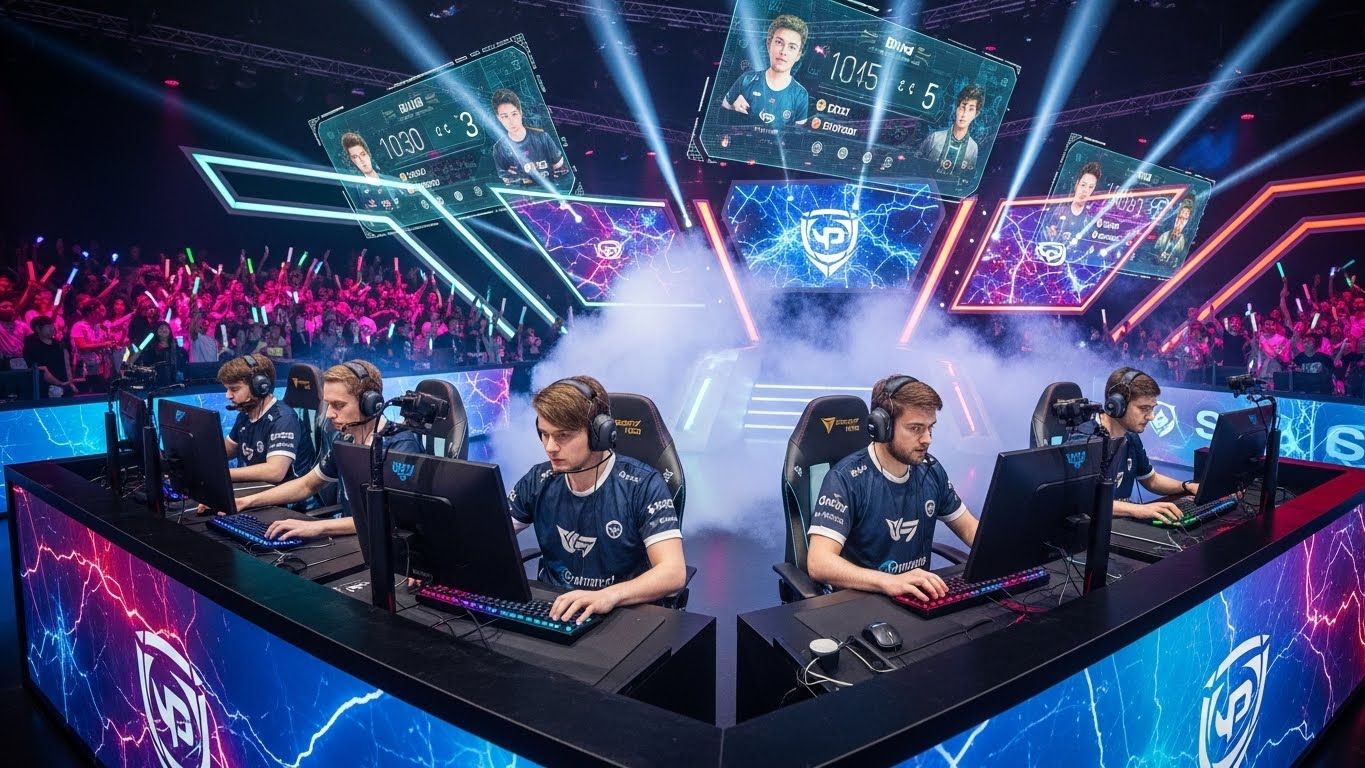
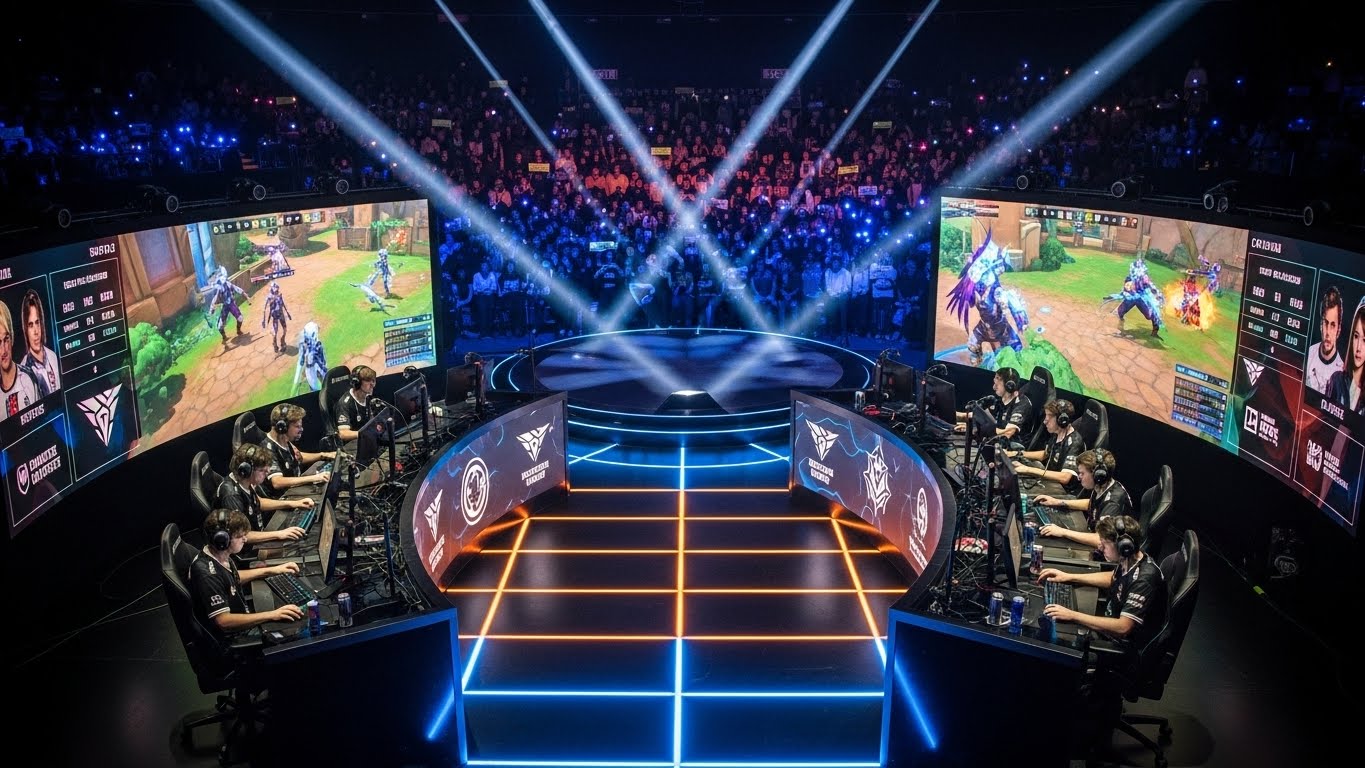
One of the most striking aspects of modern Esports is its physical presence. Massive arenas now host live tournaments that sell out in minutes. The spectacle includes professional lighting, commentary teams, live audiences, and massive screens that make the digital action visible to all.
Events like the League of Legends Worlds Final, Overwatch League Grand Finals, and Dota 2’s The International attract fans from around the world. Some tournaments even take place in stadiums that previously hosted football or basketball championships.
The scale of production rivals any major sporting event, demonstrating the entertainment power of gaming as a spectator experience.
Esports and Education
As Esports gains legitimacy, academic institutions have begun recognizing its value. Universities across North America, Europe, and Asia now offer Esports scholarships, degree programs, and varsity teams. Students can study game design, digital marketing, event management, and broadcasting through Esports-related curricula.
This academic integration bridges the gap between entertainment and professional development. Esports teaches teamwork, communication, leadership, and problem-solving—skills that are applicable far beyond gaming.
Moreover, educational Esports initiatives provide a platform for students who may not be interested in traditional sports to experience the benefits of competition and collaboration.
The Role of Technology
The success of Esports is inseparable from advances in technology. High-speed internet, powerful GPUs, and real-time communication tools have made seamless global competition possible.
Virtual reality and augmented reality are expected to further transform Esports, offering immersive experiences where the line between player and spectator may blur. Cloud gaming, with its ability to stream high-performance games to any device, could expand access to competitive gaming worldwide.
Artificial intelligence also plays a growing role in strategy analysis, training, and player performance optimization. Technology continues to push the boundaries of what Esports can achieve, both as a competitive pursuit and a form of entertainment.
Esports and Traditional Sports: A New Rivalry
Traditional sports organizations once viewed Esports as a novelty, but many have now embraced it as a complementary market. Teams from the NBA, NFL, and European football leagues have launched Esports divisions, recognizing the opportunity to connect with younger demographics.
Both industries share similarities: athletes, fans, sponsors, and structured competition. However, Esports offers unique advantages, such as accessibility, global reach, and the absence of physical limitations. Anyone with a computer and internet connection can aspire to become a professional player.
While traditional sports rely on physical performance, Esports emphasizes mental agility, hand-eye coordination, and teamwork within digital spaces. The two worlds increasingly intersect, with crossover events and joint sponsorship deals becoming common.
Challenges Facing the Esports Industry
Despite its rapid rise, Esports faces several challenges. Player burnout, due to long practice hours and constant pressure, is a serious concern. The industry also grapples with issues of stability—teams often rise and fall quickly, and not all leagues maintain consistent profitability.
Cheating, match-fixing, and toxicity within online communities pose ethical challenges that must be addressed through regulation and education. Furthermore, while viewership is massive, converting that audience into sustained financial returns remains complex.
Esports organizations and governing bodies are working to professionalize contracts, improve player welfare, and create sustainable business models that ensure long-term growth.
The Cultural Influence of Esports
Esports has reshaped modern culture in significant ways. It has influenced fashion, music, media, and even social identity. Professional gamers are now influencers, entertainers, and brand ambassadors.
Streaming personalities and competitive players command audiences that rival Hollywood celebrities. Merchandise, limited-edition collaborations, and lifestyle branding blur the line between athlete and entertainer.
The global Esports community also promotes inclusivity, connecting players from different countries, languages, and backgrounds. Online platforms have fostered friendships, rivalries, and fan cultures that transcend borders.
The Future of Esports
Looking ahead, the future of Esports appears limitless. As technology continues to evolve, so too will the scope of competitive gaming. Mobile Esports, in particular, is expanding rapidly in regions like Southeast Asia, India, and South America, where smartphones are the primary gaming devices.
The integration of virtual reality, blockchain technology, and digital collectibles could redefine fan engagement and tournament experiences. Major tech companies and game publishers are already experimenting with these innovations to enhance immersion and interactivity.
Esports will likely become a permanent fixture in mainstream media. With its inclusion in global sporting events such as the Asian Games and discussions about potential Olympic participation, it is clear that competitive gaming has earned its place on the world stage.
Conclusion: The Game That Changed the World
Esports is more than just gaming—it is a cultural movement that unites millions of people through passion, skill, and digital creativity. From humble beginnings in university labs to sold-out arenas and billion-dollar sponsorships, its journey mirrors the evolution of technology and modern entertainment.
What makes Esports extraordinary is its inclusivity. It offers opportunities to compete, create, and connect regardless of geography or physical ability. It represents the spirit of modern competition—global, digital, and endlessly innovative.
As Esports continues to grow, it challenges society to rethink what defines a sport, an athlete, and a fan. In doing so, it has carved out its own legacy as one of the defining phenomena of the 21st century.